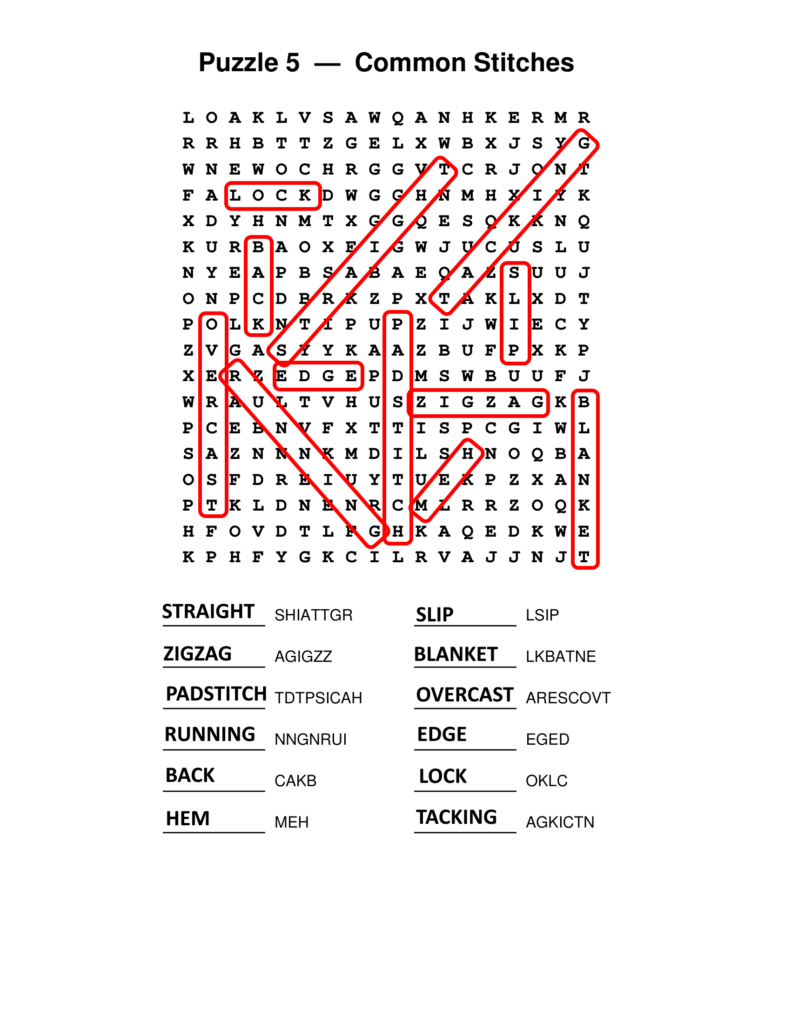
There is nothing quite as humbling as staring at a word search puzzle for ten minutes, completely convinced that the word “PINEAPPLE” was accidentally left off the grid. Word search puzzles look simple, but finding every hidden word can be surprisingly challenging.
If you find yourself scanning randomly and getting dizzy, it’s time to change your approach. With the right strategy, you can solve puzzles faster, avoid missed words, and make the experience much more enjoyable. Here are 7 proven strategies to help you master them.
1. Start With the Longest Words
Begin by looking for the longest words on your list. They are usually easier to spot because they contain more distinctive letter combinations and have fewer possible positions. Long words also give you a useful starting point for understanding the layout of the puzzle.
2. Look for Unusual Letters
Pay attention to letters such as Q, X, Z, J, and V. These letters don’t appear as frequently as common letters like E, A, or T, so they make excellent starting points. For example, if you’re searching for the word PUZZLE, find a Z first and then check the surrounding directions.
3. Search in All Eight Directions
Words in a word search aren’t always written from left to right. They can appear:
- Horizontally, from left to right or right to left
- Vertically, from top to bottom or bottom to top
- Diagonally in any direction
When you find the first letter of a word, check each of these directions systematically.
4. Use the First and Last Letters
Instead of trying to recognize an entire word at once, find its first letter and look for the final letter in the appropriate direction. For example, if you’re searching for GARDEN, locate Gs in the grid and check whether an N appears six spaces away in one of the eight possible directions. This technique is especially useful when the puzzle contains many similar-looking words.
5. Cross Off Words as You Find Them
Keep your word list organized. Cross out or highlight each word as soon as you find it. This prevents you from repeatedly searching for words you’ve already discovered and lets you concentrate on the remaining possibilities.
6. Work Systematically
Random scanning is one of the biggest time-wasters in a word search. Instead, choose a method and stick with it. You might scan each row from left to right, then each column from top to bottom, followed by the diagonals. Alternatively, you can work through your word list one word at a time. The important thing is consistency.
7. Save the Hardest Words for Last
Some words will practically jump out at you, while others seem impossible to find. Don’t spend too long searching for one difficult word. Move on, solve the easier ones, and return to the difficult word later. Once you’ve crossed out several possibilities, the remaining word often becomes much easier to spot.
💡 The Takeaway: A Simple Winning Strategy
For the fastest and most reliable approach, follow this quick-reference checklist:
- Start with: Long or unusual letters (
Q,X,Z). - Check: All eight directions using first and last letters.
- Maintain: A systematic scan and cross off words as you go.
The biggest secret is simple: stop searching randomly. A word search puzzle rewards patience and a methodical eye. Once you develop a consistent scanning pattern, even large and difficult puzzles become much easier to solve.
So next time you pick up a word search, don’t just start hunting. Have a strategy and let the puzzle come to you.
What’s your go-to strategy when you get stuck on a word search? Do you hunt letter-by-letter or look for long words first? Drop a comment below!